Hiring Professional Movers vs. Moving Yourself: The Real Cost No One Talks About
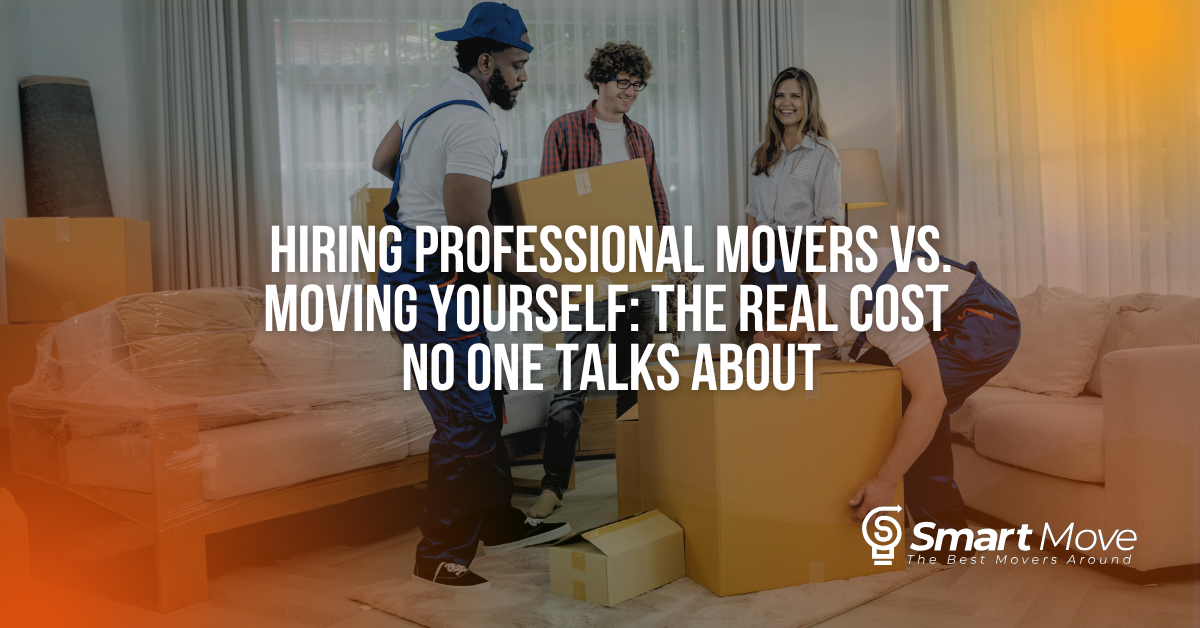
The debate between hiring professional movers and moving yourself is one nearly every Greenville resident faces at some point. Most people approach it the same way: they open a calculator and compare the cost of a moving crew to a truck rental. But that comparison misses the bigger picture entirely. The true cost of moving yourself rarely shows up on a receipt.
It’s 7 a.m. on a Saturday. A 26-foot rental truck is idling in the driveway. Three friends arrive late, slightly hungover, and already low on energy. A king-size sofa refuses to fit through the doorway. By noon, someone has strained their back. By mid-afternoon, there’s a scraped wall that will need repainting before you hand over the keys. By midnight, you’re exhausted, surrounded by half-unpacked boxes in a barely assembled bedroom, with a full workweek just hours away.
That’s the reality of DIY moving for most households. Not the $300 you thought you saved, but the physical strain, unexpected setbacks, and lingering exhaustion that follow for days or even weeks.
In this article, we break down what you’re really trading when you skip the professionals and why more Greenville homeowners, professionals, and families are beginning to see
residential moving services not as a luxury, but as a practical, strategic choice.
You Think You’re Saving Money. You’re Not.
The biggest misconception behind DIY moving is the belief that the main cost is simply the truck rental. On paper, a rate of around $100 to $400, depending on distance and truck size, looks like a clear win compared to hiring professional movers.
However, this figure only reflects the surface cost. It does not account for the many additional expenses that inevitably come with moving yourself. Packing materials such as boxes, tape, bubble wrap, stretch wrap, and mattress covers quickly add up. You may also need to rent furniture pads, dollies, and appliance trolleys. Then there is fuel for a heavy truck that often runs at low mileage, cleaning supplies for both properties, and food or drinks for friends who help you move.
What is often overlooked is the cost of damage and replacement. Broken items, scratched furniture, or poorly packed valuables can easily turn a “budget-friendly” move into an expensive one.
For a typical three-bedroom home in Greenville, a DIY move can realistically cost between $600 and $1,100 in direct expenses alone, before anything is even loaded into the truck. This also excludes time, which is often the most undervalued cost in the entire process.
DIY vs Professional Movers: What’s Actually Included
| Hidden DIY Costs | What Professional Movers Include |
|---|---|
| Truck rental (full day) | Fully equipped moving trucks |
| Packing supplies such as boxes, tape, wrap, and pads | Professional-grade equipment including dollies straps and protective pads |
| Dolly or appliance hand truck rental | Trained moving crew with coordinated execution |
| Fuel costs for low-efficiency trucks | Liability coverage for your belongings |
| Risk of damaged or replaced items | Efficient loading and unloading process |
| Lost workday productivity | Time saved so you can work or manage other priorities |
| Physical exhaustion and recovery time | Move completed in hours not a full weekend |
The perceived savings of DIY moving are often misleading. While the upfront cost appears lower, the real expense comes in the form of time, effort, risk, and disruption to your daily life. For most people, the true cost of moving yourself is not just financial, but also the lost hours that could have been spent on work, rest, or more important priorities.
Professional Moving Equipment vs. Whatever’s in Your Garage
One of the most underestimated differences between DIY moving and hiring professional movers is not the truck or even the manpower, but the equipment used to protect and transport your belongings. This is the layer most people overlook when calculating cost, yet it is often what determines whether your furniture, floors, and walls stay intact throughout the move.
Professional movers operate with systems designed for safety and precision, while DIY moves usually rely on basic, improvised tools that were never intended for heavy or delicate household transport. To understand the gap clearly, it helps to compare what each approach actually brings to the job.
What Professional Movers Bring
Professional moving teams arrive with a full set of specialized tools designed specifically for safe handling and efficient transport:
- Furniture protection and surface safety
- Heavy-duty padded moving blankets to prevent scratches and dents
- Stretch wrap to secure surfaces and keep drawers or doors closed
- Floor runners to protect carpets, tiles, and hardwood during movement
- Lifting and transport equipment
- Furniture dollies for heavy or bulky items
- Appliance hand trucks for refrigerators, washing machines, and dryers
- Industrial-grade straps for controlled lifting and stability
- Specialty tools for difficult items such as pianos or oversized furniture
- Packing and securing materials
- Professional crating solutions for fragile or high-value items
- Reinforced cushioning materials to prevent shifting in transit
- Proper load-securing systems inside the truck
- Technical handling expertise
- Trained techniques for navigating tight corners, staircases, and doorframes
- Correct wrapping methods for delicate surfaces like glass or marble
- Safe lifting coordination to reduce the risk of injury and damage
What Most DIY Moves Rely On
In comparison, DIY movers typically work with limited, general-purpose materials that are not designed for professional-grade handling:
- Basic cardboard boxes of varying quality
- Standard packing tape and plastic wrap
- Household items used as makeshift padding, such as blankets or towels
- Little to no specialized lifting or moving equipment
This often results in inconsistent protection and increased risk during lifting, carrying, and transport.
Why This Gap Matters in Real Moves
The difference in equipment is not just technical; it has very real consequences during a move:
- Furniture without proper padding can leave permanent scratches on floors or walls
- Heavy appliances lifted without the correct tools can lead to injury or structural damage to the home
- Poorly secured items inside the truck can shift during transit, resulting in broken or damaged belongings
Cost Perspective
While DIY movers often overlook equipment costs, they add up quickly:
- Appliance dolly rental: approximately $40–$80 per day
- Furniture padding sets: often $120 or more to purchase outright
- Additional packing materials and protective gear: varies depending on household size
Professional movers, on the other hand, already include all necessary equipment and expertise as part of the service, ensuring everything is properly staged and ready from the start.
For those who want a completely hands-off experience, many professional moving services also offer
full packing solutions, where the team handles boxing, wrapping, labeling, and all materials. This removes the need for homeowners to manage even basic packing supplies.
Lastly, the equipment gap between DIY moving and professional movers is one of the clearest and most measurable differences in the entire process. It is also one of the most common reasons DIY moves result in avoidable damage, unexpected repair costs, and unnecessary stress.
Your Friends Are Volunteers. Our Crew Is Trained.
There is a common assumption in DIY moving that “free help” from friends is a practical way to reduce costs. In reality, this often creates more uncertainty than savings. What seems like a simple coordination of extra hands can quickly turn into delays, confusion, and physical strain on moving day.
To understand the difference clearly, it helps to look at how friend-assisted moves typically unfold compared to a trained professional crew.
The Reality of “Free Help”
Most DIY moves relying on friends tend to follow a predictable pattern:
- Plans change at the last minute
- One person cancels on the day
- Another arrives late or unprepared
- Limited physical capability under pressure
- Only one or two people are left to handle heavy items
- Tasks like moving refrigerators or sofas become unsafe or inefficient
- No structured moving experience
- Friends are unfamiliar with safe lifting techniques
- There is no knowledge of how to navigate tight hallways or staircases
- Truck loading is often done without proper weight distribution
- Increased risk during complex items
- Items like pianos or large appliances require specialized handling
- Without training, the risk of damage or injury increases significantly
Why Professional Movers Operate Differently
A trained moving crew is not just a group of strong individuals; they operate with coordination, technique, and experience:
- Structured teamwork and reliability
- Full crew arrives as scheduled and works as a coordinated unit
- Each member has defined roles for lifting, packing, and transporting
- Proper moving techniques
- Use of two-person carries for narrow spaces
- Safe handling methods for heavy or awkward items
- Experience with stair navigation and tight corners
- Specialized knowledge for complex items
- Proper handling of fragile or high-value furniture
- Expertise in moving appliances safely without damage
- Understanding that items like pianos require specific tools and training
- Reduced risk of injury and damage
- Correct lifting techniques reduce strain on the body
- Professional crews are trained to avoid common moving accidents
The Liability Factor Most People Overlook
One of the most important but least discussed differences involves responsibility during a DIY move:
- If a friend is injured while helping, there may be potential medical or liability implications depending on insurance coverage
- Homeowners’ and renters’ insurance policies vary widely in how they handle such situations
- Professional movers carry their own insurance and follow safety protocols designed to minimize injury risk
A Practical Way to Think About Time
A useful way to evaluate the decision is to consider opportunity cost: If your time is worth $80 an hour professionally, why spend an entire weekend on a task a trained crew can complete in just a few hours?
In the end, the difference between friends and professionals is not just strength, but training, coordination, and accountability. What starts as a cost-saving idea often becomes a physically demanding and unpredictable experience. At the same time, trained crews are built to complete the same job efficiently, safely, and with far fewer risks.
The Three Weeks You Can’t Get Back
This is the part of the DIY moving versus professional movers conversation that often gets overlooked, because it challenges the idea of self-sufficiency. The real cost of moving yourself is not just financial. It is the extended period of physical exhaustion, mental fatigue, and disrupted routine that follows long after the move is “done.”
Instead of a single weekend event, a DIY move stretches across several weeks, affecting productivity, focus, and daily stability.
Realistic DIY Moving Timeline (Three-Bedroom Home)
| Phase | What Happens | Impact on You |
|---|---|---|
| Week Before the Move | Sourcing boxes and packing materials through multiple errands, coordinating helpers, booking a truck, and starting to pack while still living in the home | High stress, disrupted daily routine, time lost to preparation and logistics |
| Moving Weekend | Final packing, early start around 7 a.m., full day of lifting, loading, transport, unloading, and truck return the next day | Extreme physical fatigue, long hours, increased risk of injury or damage |
| Week One After the Move | Unpacking after work, setting up essential spaces like the kitchen and bedroom, searching for items | Ongoing disruption, reduced comfort at home, and low productivity after work hours |
| Weeks Two to Three | Remaining boxes still unpacked, furniture not fully arranged, lingering soreness, and mental fatigue. | Delayed return to normal life, continued mental load of “unfinished move.” |
The Numbers Behind the Cost
- Over 30 hours of productive time are lost in a typical DIY move
- Moves often take 3 times longer than people initially estimate
- Opportunity cost can reach around $2,250 at $75 per hour, often exceeding professional moving costs
Why This Matters More Than It Seems
For professionals such as doctors, lawyers, consultants, and business owners, this three-week disruption is not just inconvenient; it is disruptive. It directly affects focus, performance, and output. Even small inefficiencies during this period can lead to missed deadlines and reduced work quality.
This is why many people now treat moving as a professional service rather than a DIY weekend task, prioritizing time, energy, and continuity over short-term savings.
For students,
college moving services help reduce disruption during critical academic periods. For households that cannot complete everything at once,
storage services allow a phased approach that reduces pressure and avoids rushed decisions.
The highest cost of DIY moving is not what you spend, but what you lose in time, focus, and recovery during the weeks that follow.
What a Back Injury Actually Costs You
Moving is physically demanding in ways that are often underestimated. It is not comparable to a gym workout or casual lifting. It is closer to carrying extremely heavy and awkward objects through narrow spaces, often down stairs, while coordinating with people who are also untrained. One misstep, poor grip, or awkward angle can lead to serious injury. In fact, the Bureau of Labor Statistics consistently identifies lifting and carrying as one of the leading causes of acute back injuries in non-occupational settings. This becomes very real when the person injured is the one sitting in urgent care after a DIY move.
The Real Impact of a Single Lifting Injury
A back injury from moving is rarely isolated to one moment. It often triggers a chain of consequences that affects both health and daily life:
- Immediate medical response
- Sudden strain or injury during lifting
- Urgent care or doctor visit required
- Medical costs typically range from $200 to $800 without insurance
- Short-term physical limitation
- Reduced mobility lasting two to six weeks
- Difficulty bending, lifting, or performing basic tasks
- Interrupted sleep due to pain or discomfort
- Work and productivity disruption
- Missed workdays or reduced output
- Delayed return to normal physical activity
- For self-employed professionals, direct income loss during recovery
- Delayed moving recovery
- Unpacking slows significantly
- Essential home setup is postponed
- The sense of “settling in” is pushed further back
What begins as a simple lifting mistake can quickly turn into a multi-week disruption affecting both health and financial stability.
Property Damage is Just as Common
In addition to personal injury, property damage is among the most common outcomes of DIY moving, especially when heavy or bulky items are handled without proper tools or techniques.
Common examples include:
- Scratched or scuffed hardwood floors from dragging furniture
- Dented walls and chipped drywall around tight corners or doorframes
- Broken furniture legs or weakened joints from improper lifting
- Cracked mirrors, glass tables, or fragile items due to poor securing in transit
These issues often happen during the most difficult parts of a move, such as staircases, narrow hallways, or loading into the truck.
The Insurance Reality Most People Overlook
One of the least understood risks of DIY moving is insurance coverage:
- Many homeowners’ and renters’ insurance policies do not cover damage caused during self-directed moves
- This includes both property damage and certain personal injury situations
- As a result, repair or replacement costs are often paid out of pocket
A single injury or damaged item can quickly erase any perceived savings from a DIY move. When combined with medical costs, lost work time, and repair expenses, the financial impact often exceeds the cost of hiring professionals in the first place.
This is why many people ultimately choose trained movers, not just for efficiency, but for risk reduction, safety, and peace of mind during a physically demanding process.
The One Scenario Where Moving Yourself Makes Sense
Credibility requires honesty: there are situations where DIY moving is not only acceptable but genuinely practical. In very specific circumstances, handling the move yourself can be a reasonable choice. This usually applies when the scope is small, the logistics are simple, and the risk of damage or injury is low.
When DIY Moving Can Work
DIY moving can make sense if most of the following conditions are met:
- You are moving to a studio apartment or a very small living space
- You have minimal furniture and mostly boxed items
- The move is a short distance, ideally within the same area
- You have a full weekend available with no time pressure
- You have reliable help who is genuinely available and physically capable
- There are no complex items such as large appliances, fragile antiques, or heavy equipment
In this type of scenario, the workload is manageable, the coordination is straightforward, and the financial savings can be meaningful.
When DIY Moving Stops Making Sense
However, this scenario does not represent the majority of real-world moves. It quickly becomes unrealistic when applied to:
- Three-bedroom homes with full furniture sets
- Households with appliances, dining sets, and home office equipment
- Moves involving garages, storage rooms, or large accumulations of items
- Long-distance relocations to cities such as Raleigh or Charlotte
- Office or business relocations with IT systems, desks, and filing infrastructure
- Anyone with a tight schedule where Monday productivity actually matters
As complexity increases, the risks, time demands, and physical strain rise significantly, often outweighing any perceived savings.
The Key Point Most People Miss
The fact that DIY moving works in limited situations does not justify using it everywhere. Instead, it highlights an important decision point: being honest about the scale and complexity of your move.
Once you correctly categorize your situation, the choice becomes much clearer. Some moves are simple enough to handle personally, while others benefit significantly from professional support designed to manage scale, safety, and efficiency.
Before You Move Yourself, Check This
Before committing to a DIY move, there is one step most people skip but should not: understanding what your insurance actually covers. A quick call to your provider can clarify a critical question: “Does my policy cover items damaged or lost during a move I am conducting myself?” In many cases, the answer is either no or yes with strict limitations and exclusions.
Professional movers, on the other hand, typically include valuation coverage for belongings as part of their service, offering an added layer of protection if belongings are damaged during handling or transport.
High-Risk Items That Change Everything
Some household items are in a completely different category when it comes to moving risk. These are not just heavy; they require specialized handling, equipment, and experience:
- Gun safes and high-security safes
- Often weigh between 200 and 800 pounds
- Require specialized dollies, rigging equipment, and stabilization tools
- Must be moved through narrow doorways, staircases, and tight corridors
- Incorrect handling can cause serious injury, structural damage, or permanent floor damage
Attempting to move these items without trained professionals is not just difficult; it is a genuine safety risk to both people and property.
When Family Moves Add Extra Complexity
The risks increase further when a move involves older adults or families assisting aging parents. These situations require more than physical strength. They require patience, planning, and careful handling of both people and belongings.
This is where
senior moving services become especially valuable. These services are designed specifically for transitions involving older adults and typically include:
- Gentle, structured moving support with reduced physical stress
- Careful handling of personal and sentimental belongings
- Patient coordination to reduce emotional and physical strain
- Trained crews experienced in assisting vulnerable individuals safely
Why This Step Matters
Checking insurance coverage and understanding item-specific risks helps you avoid unexpected financial and physical consequences. What often appears to be a straightforward move can quickly become a complex operation involving safety hazards, liability gaps, and specialized handling requirements.
In many cases, this single check is what makes the difference between a manageable move and a costly, stressful one.
Flexible Alternatives to Full-Service Moving
Not every move requires a full-service package. Depending on your budget, involvement level, and the type of belongings you are moving, there are practical middle-ground options that still provide professional support without the full cost of a complete relocation service. These options help reduce risk, improve efficiency, and give you more control compared to a fully DIY move.
Comparison of Flexible Moving Options
| Option | What It Includes | What You Handle | Best For | Key Benefits |
|---|---|---|---|---|
| Labor-only moving services | Professional movers assist with lifting, loading, and unloading only | Truck rental, driving, packing, and logistics planning | Homeowners who want to save money but avoid heavy lifting | Reduces physical strain while keeping costs lower than full-service moving. Improves safety during the handling of heavy or bulky items |
| White-glove moving services | Full specialist care, including packing, wrapping, transport, and precise placement | Minimal involvement required | High-value or delicate items such as antiques, artwork, or custom furniture | Maximum protection and attention to detail. Ideal for fragile, valuable, or irreplaceable belongings |
| Professional full-service providers (e.g., Smart Move) | End-to-end moving support, including packing, loading, transport, and unloading by trained crews | Little to no involvement needed | Residential or commercial moves requiring efficiency and reliability | Structured, professional execution that reduces stress and improves overall moving efficiency. |
These flexible solutions bridge the gap between DIY moving and full-service relocation, allowing you to choose the level of support that fits your situation:
- Labor-only services reduce physical effort while maintaining cost control
- White-glove services ensure maximum protection for high-value or fragile items
- Professional providers like Smart Move offer complete end-to-end coordination for a stress-free experience
- All options significantly reduce the risks associated with unmanaged or friend-assisted moves
These alternatives give you the flexibility to balance cost, control, and convenience while still benefiting from professional expertise where it matters most.
Moving in Greenville, NC: What Makes It Different
When comparing hiring professional movers vs moving yourself, the “real cost” often becomes clearer in a specific local context. Greenville, North Carolina, is not a uniform moving environment. It is a mix of older neighborhoods, student housing around ECU, and expanding residential developments, each bringing its own logistical challenges. These conditions can significantly increase the difficulty, time, and risk involved in a DIY move, especially for larger households.
Understanding the local landscape helps explain why professional movers often deliver more than convenience; they reduce hidden costs that DIY moves rarely account for.
Local Conditions That Impact Moving in Greenville
- Older residential neighbourhoods
- Tight staircases and narrow hallways
- Smaller doorframes are not designed for modern furniture sizes
- Increased risk of wall scuffs and furniture damage during DIY handling
- Newer suburban developments
- Unpaved or low-clearance access roads in some areas
- Truck positioning and parking limitations
- Longer carry distances from the truck to the property
- ECU student housing zones
- High-density living with limited parking and access restrictions
- Frequent multi-story walk-ups without lifts
- Tight moving schedules during peak academic transitions
- Seasonal climate conditions
- Summer heat index often exceeds 100°F
- Increased physical fatigue and dehydration risk during long DIY moves
- Slower progress due to heat-related breaks and safety concerns
Why Local Experience Matters in a Move
A professional moving team familiar with Greenville operates with practical knowledge that directly reduces time and risk:
- Knows which residential streets require smaller or alternative truck access
- Understands how to manage walk-ups in high-temperature conditions safely
- Has experience navigating neighborhood-specific challenges such as Five Points or ECU-adjacent housing
- Adapts quickly to different property types, from older homes to modern townhouses
This level of familiarity helps prevent delays, equipment issues, and avoidable damage that often occur during first-time DIY attempts.
Beyond Local Moves: When Distance Increases Complexity
The gap between DIY and professional moving becomes even more significant in long-distance relocations. Long-distance moving services help manage:
- Coordinated logistics across cities or states
- Secure transport over extended travel distances
- Structured scheduling to ensure timely delivery
- Reduced risk of damage during prolonged handling and transit
For Businesses and Commercial Moves
For companies relocating offices or facilities, the stakes are even higher. Commercial moving services focus on:
- Minimizing operational downtime
- Safely transporting office equipment, IT systems, and workstations
- Structured planning to maintain business continuity
- Efficient setup to resume operations quickly
Why This Matters in the DIY vs Professional Debate
Greenville’s mix of housing types, climate conditions, and student turnover creates a moving environment where hidden costs accumulate quickly. What may appear to be a simple DIY move often becomes a multi-day, physically demanding process with increased risk of damage, delay, and exhaustion.
This is where the real difference emerges in the debate of hiring professional movers vs moving yourself. Professionals are not just lifting furniture; they are navigating local conditions, reducing risk, and ensuring that a complex process is completed efficiently and safely.
Your Next Move Should Be Your Easiest One
The case against DIY moving is not about capability. Most people who move themselves are fully capable of lifting, packing, driving, and pushing through a physically demanding weekend. The real question is whether using all of that energy for a move is the best use of your time, focus, and effort.
The true cost of moving yourself is rarely the truck rental. It is the three weeks of lost momentum, the physical strain that lingers after the move, the risk of injury, the damage to belongings or property, and the professional or personal time that gets pulled away from everything else that matters. For many Greenville households managing full homes, full schedules, and full responsibilities, the cost quietly exceeds the price of hiring professionals before the first box is even sealed.
Hiring professional movers is not an unnecessary expense. It is a way to protect your time, reduce risk, and ensure your next chapter begins with clarity and energy rather than exhaustion and recovery.
If you are planning a move in Greenville or beyond,
Smart Move provides professional moving support designed to take the pressure off your shoulders. From careful handling and efficient transport to structured coordination, their team helps ensure your move is completed safely and smoothly.
Contact us today!